
Sustainable, Resilient Design for Civic Projects
In 2017, FFA Architecture and Interiors signed onto the AIA 2030 Commitment, joining a national effort to dramatically reduce building energy use and carbon emissions. Since then, we have treated performance not as an aspiration, but as a measurable responsibility.
Public buildings carry a unique mandate. They are funded by bonds, supported by levies, and maintained through taxpayer dollars. Communities often express strong values around sustainability and climate action, but capital budgets and operations budgets do not always align with those ambitions.
Our responsibility is clear: deliver high-performance, resilient civic buildings that respect both environmental goals and fiscal realities. Today, as the 2030 targets increase to a 90% reduction in energy use intensity (pEUI) for all signatories, that responsibility becomes even more urgent.

Why the AIA 2030 Commitment Matters
The built environment accounts for a significant portion of operational carbon emissions. For cities, counties, and public agencies, building performance directly affects long-term operating costs and community resilience.
The AIA 2030 Commitment sets incremental targets to reduce projected EUI relative to a baseline building. Those targets have risen over time, culminating in a requirement for participating firms to achieve a 90% reduction beginning in 2025.
For public-sector owners, this framework provides:
- A measurable benchmark for sustainability
- A common language for performance
- Accountability through annual reporting
- A pathway toward lower long-term operating costs
FFA integrates this commitment into our design process from project inception through documentation. We do not treat sustainability as an add-on. We embed it in early decisions that shape cost, durability, and performance.
2024 Performance: Measurable Results
Last year, FFA reported 16 active projects under the AIA 2030 Commitment.
Across those projects, we achieved an average 67% reduction in predicted EUI relative to baseline models. Five projects stood out for exceptional modeled performance:
Sunrise Water Authority Campus
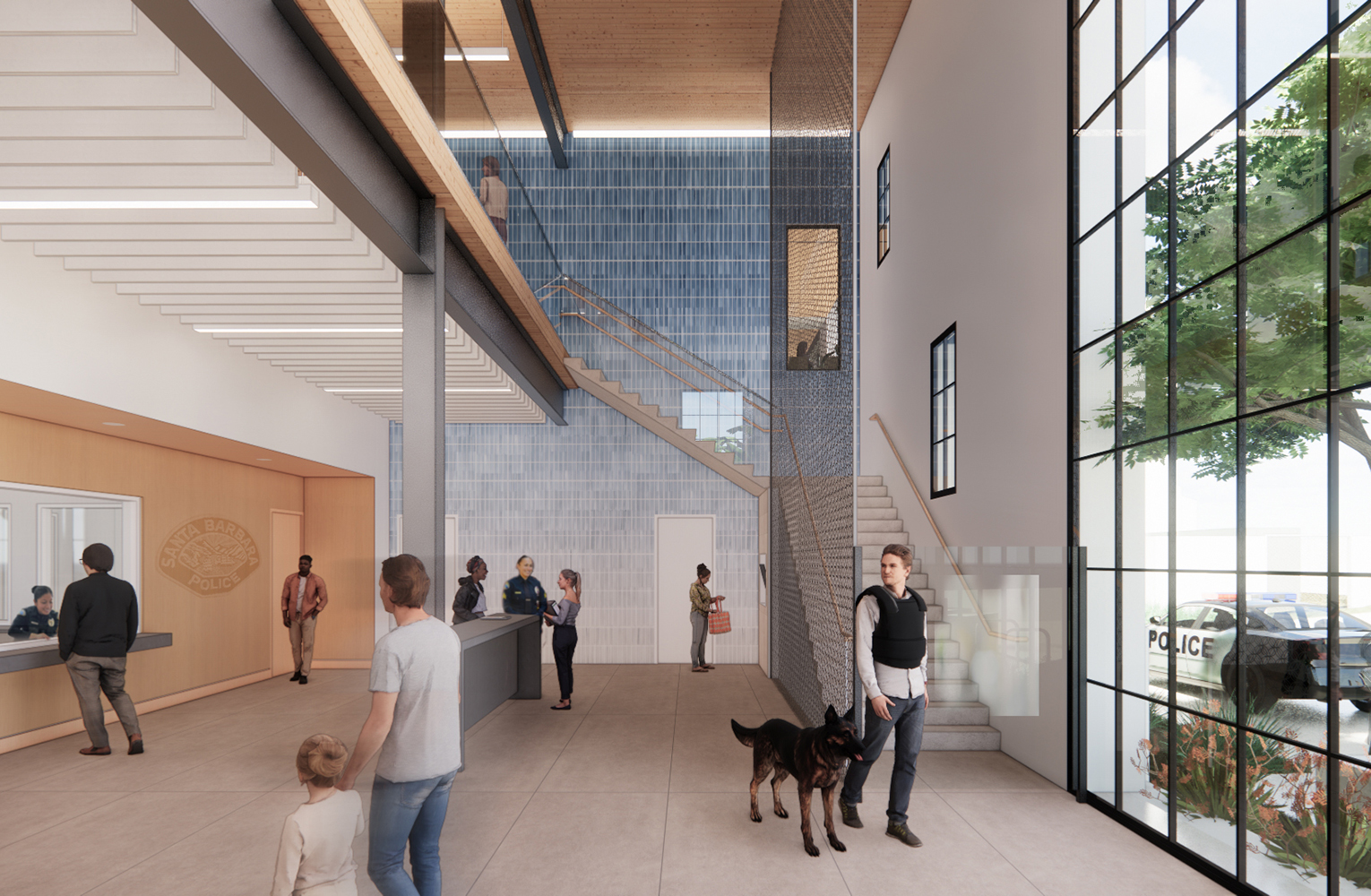


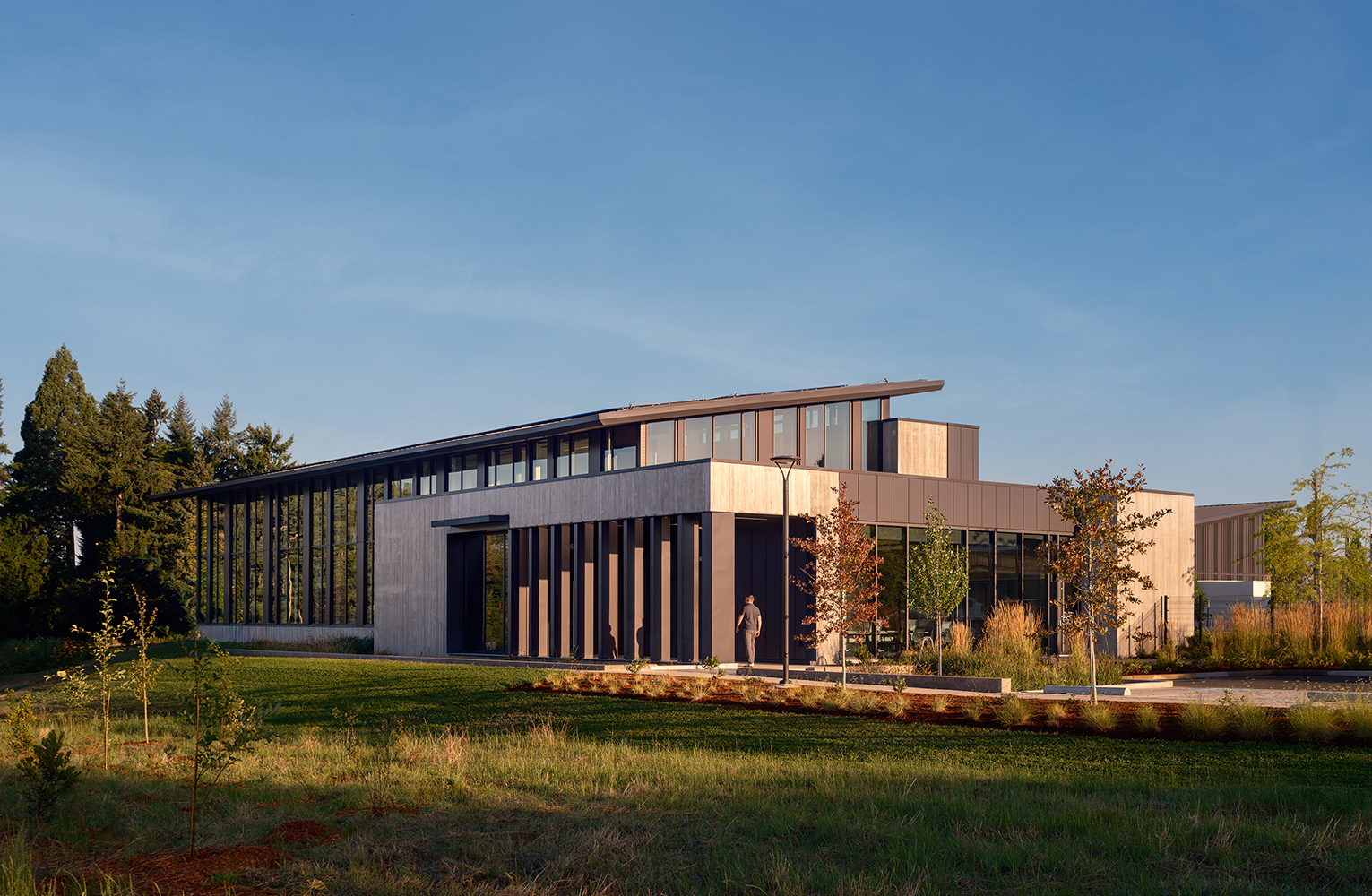
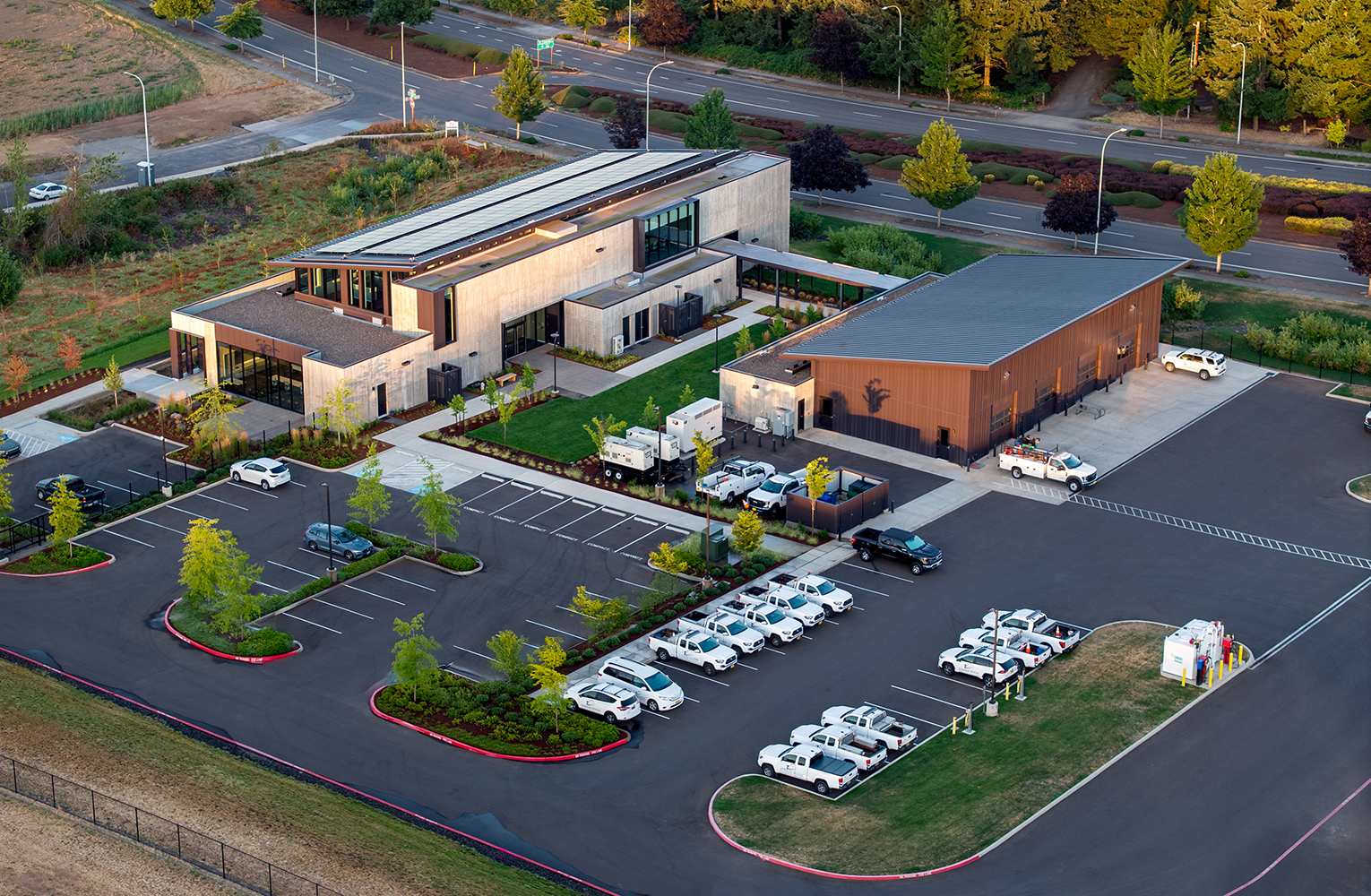
These projects achieved modeled reductions ranging from 65% to 109%.
Each project type differs—public safety, community center, regional office, utility campus—but the underlying approach remains consistent. We reduce loads first. We align systems with climate. We leverage renewable energy strategically. And we collaborate early with engineering partners to ensure performance aligns with the budget.
Our results demonstrate that high-performance civic architecture is achievable across diverse building types, even within the financial constraints typical of publicly funded work.
Designing for Performance Within Public Budgets
Public projects often face two financial pressures:
Limited construction budgets driven by bond caps or taxpayer expectations
Restricted operations budgets that must support long-term maintenance and utility costs
Communities may strongly support sustainability in principle. However, the capital available to implement it is finite.
Our approach responds directly to this reality.
Start With the Building, Not the Equipment
We reduce energy demand before we invest in mechanical systems.
Solar Alignment and Passive Strategies
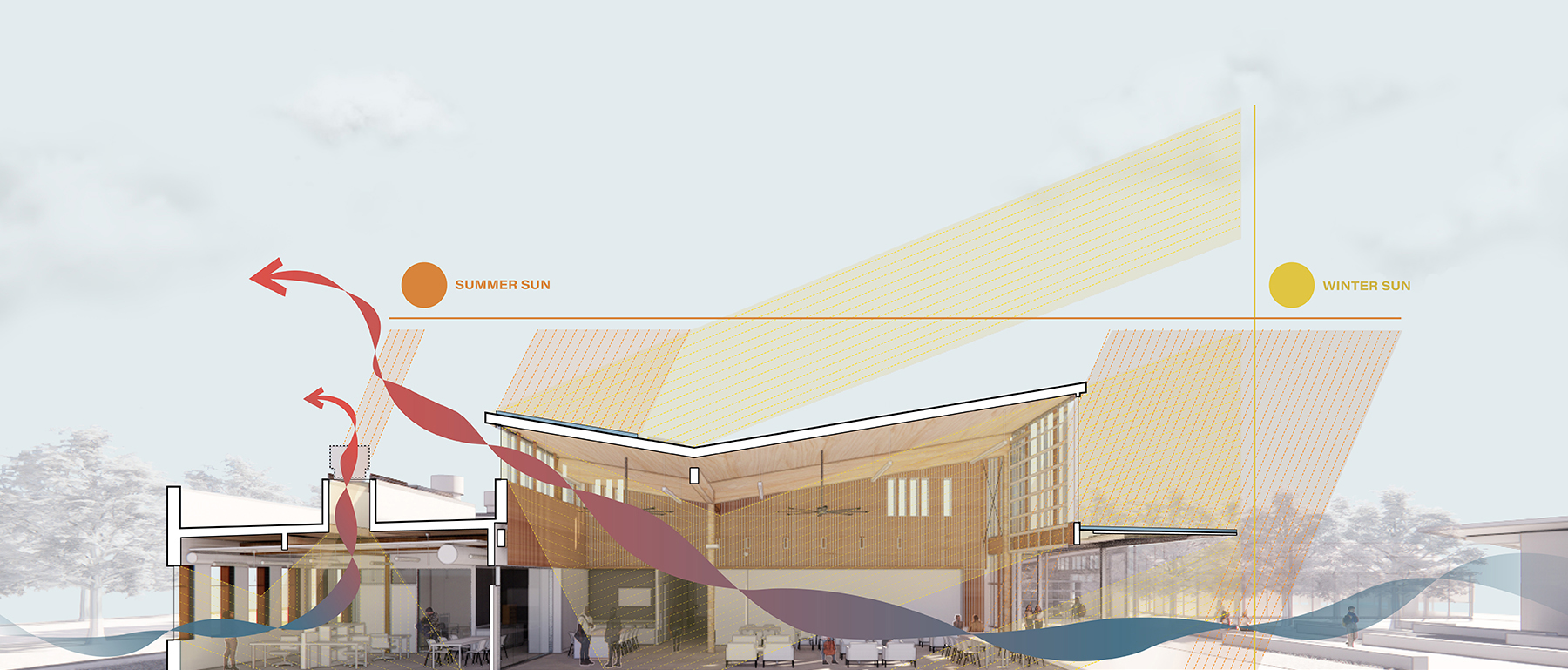
We orient buildings to maximize daylight while minimizing unwanted heat gain. Strategic solar alignment reduces lighting demand and improves occupant comfort. In several projects, passive ventilation strategies reduce mechanical loads and enhance indoor air quality.
These moves cost little compared to oversized mechanical systems—and they pay dividends over decades.
All-Electric and Electric-Ready Design
We design all-electric buildings whenever feasible, positioning civic facilities for long-term decarbonization and grid evolution. Where full electrification is not yet practical, we ensure buildings are electric-ready, reducing future retrofit costs.
This strategy protects public investment while aligning with climate action goals adopted by many municipalities.
Photovoltaics as a Load Offset Strategy
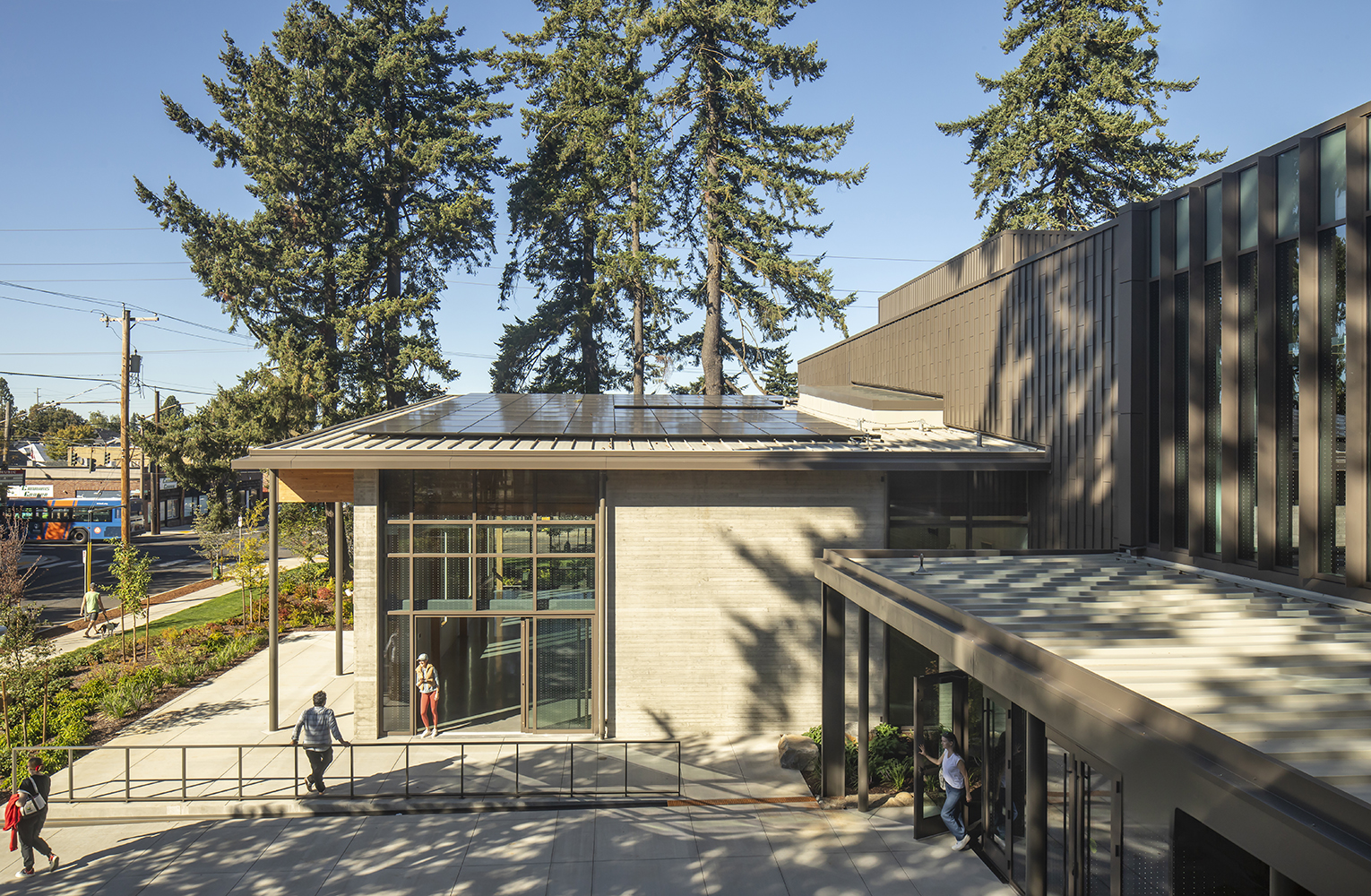
One of the most common performance drivers across our recent projects is the strategic use of solar photovoltaic (PV) systems.
When thoughtfully integrated, PV panels offset operational energy demand and stabilize long-term utility costs. For bond-funded projects, this approach offers a tangible sustainability investment that communities can see and understand.
Rather than treating solar as symbolic, we use it as a calculated load-offset tool within the broader energy model.
Early MEP Collaboration: Performance and Cost Alignment
Energy performance does not emerge at the end of the design process. It is shaped by early collaboration.
We engage mechanical, electrical, and plumbing engineers at the earliest stages of schematic design. Through iterative modeling and coordinated decision-making, we right-size systems based on actual, reduced loads rather than assumed peak demands.
This process prevents overdesign and ensures that capital is directed to where it yields the greatest operational return.
In civic work, where construction budgets are fixed and publicly scrutinized, this level of coordination protects both performance goals and fiscal accountability.
Resilience Beyond Energy
Sustainable design in the public realm must also support durability, safety, and adaptability.
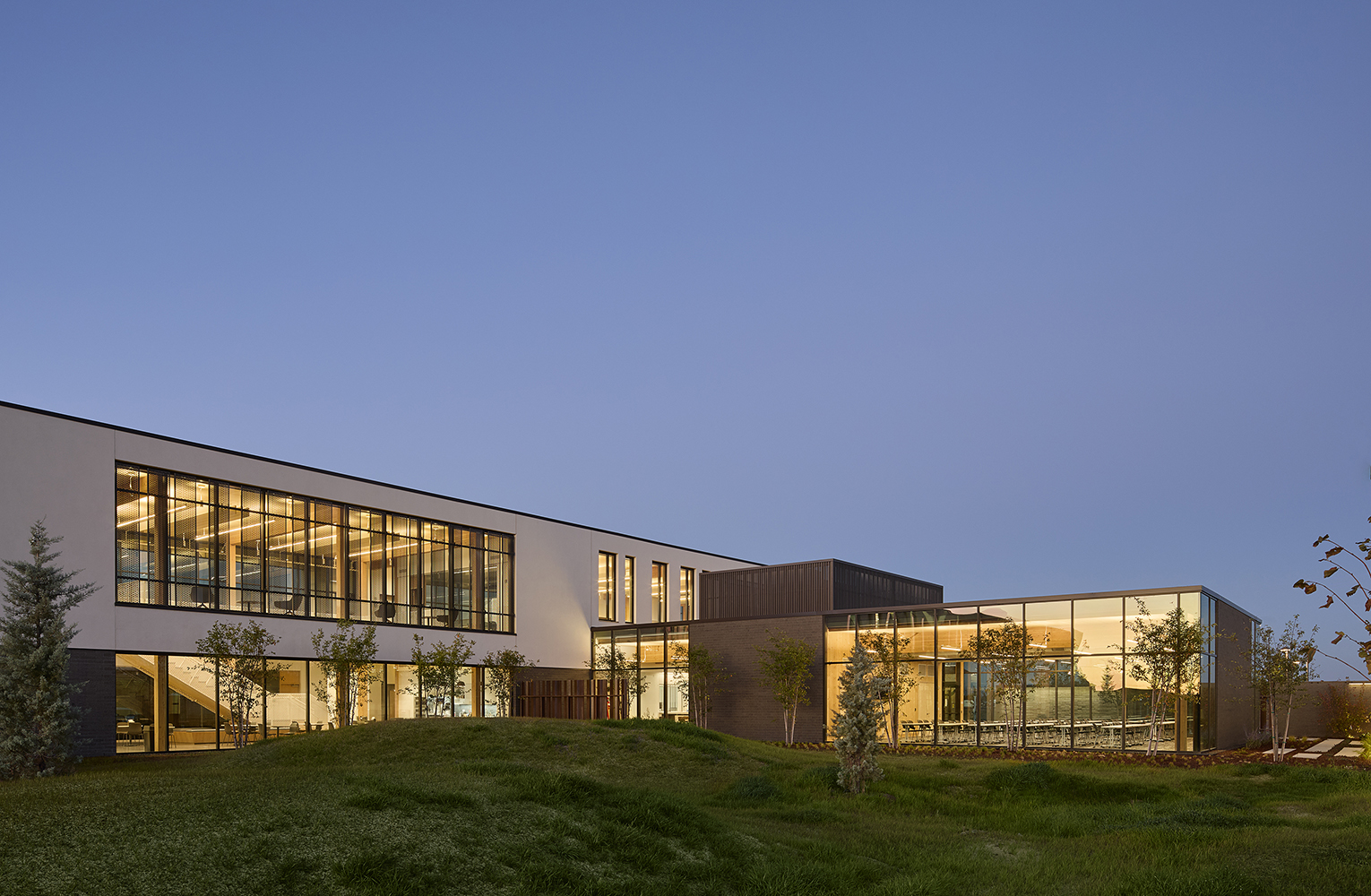
Many of our highest-performing projects, including public safety facilities and community centers, serve as essential service buildings. These facilities must operate reliably during extreme weather events and long-term climate shifts.
High-performance envelopes, electrification strategies, and renewable integration contribute not only to carbon reduction but to operational resilience.
For public owners, resilience is not an abstract concept. It directly affects emergency response, community health, and long-term asset stewardship.
Looking Ahead: Raising the Bar
Beginning with the 2025 reporting year, the AIA 2030 Commitment increases its target to a 90% pEUI reduction for signatory firms.
At FFA, we view this moment not as a compliance milestone, but as a design challenge.
How do we continue to deliver measurable performance in buildings that are publicly funded, operationally accountable, and deeply embedded in their communities?
The answer lies in disciplined design decisions, early technical collaboration, and a clear understanding of lifecycle value.
Sustainable Design as Public Stewardship
Public architecture carries a dual obligation: environmental responsibility and fiscal stewardship.
Communities invest in buildings that must last 40, 50, or 75 years. Energy performance directly affects long-term operating budgets, taxpayer trust, and the resilience of civic infrastructure.
Our 2024 performance demonstrates that meaningful energy reduction is achievable, even in projects shaped by bond caps and operational constraints.
