If you’ve seen mass timber appear in corporate headquarters and recreation centers and thought, “That could never work for us,” you’re not alone. It’s one of the most common assumptions we hear from public owners, and it’s understandable. Timber has a reputation for a higher cost.
But that reputation is often based on inaccurate cost assumptions.
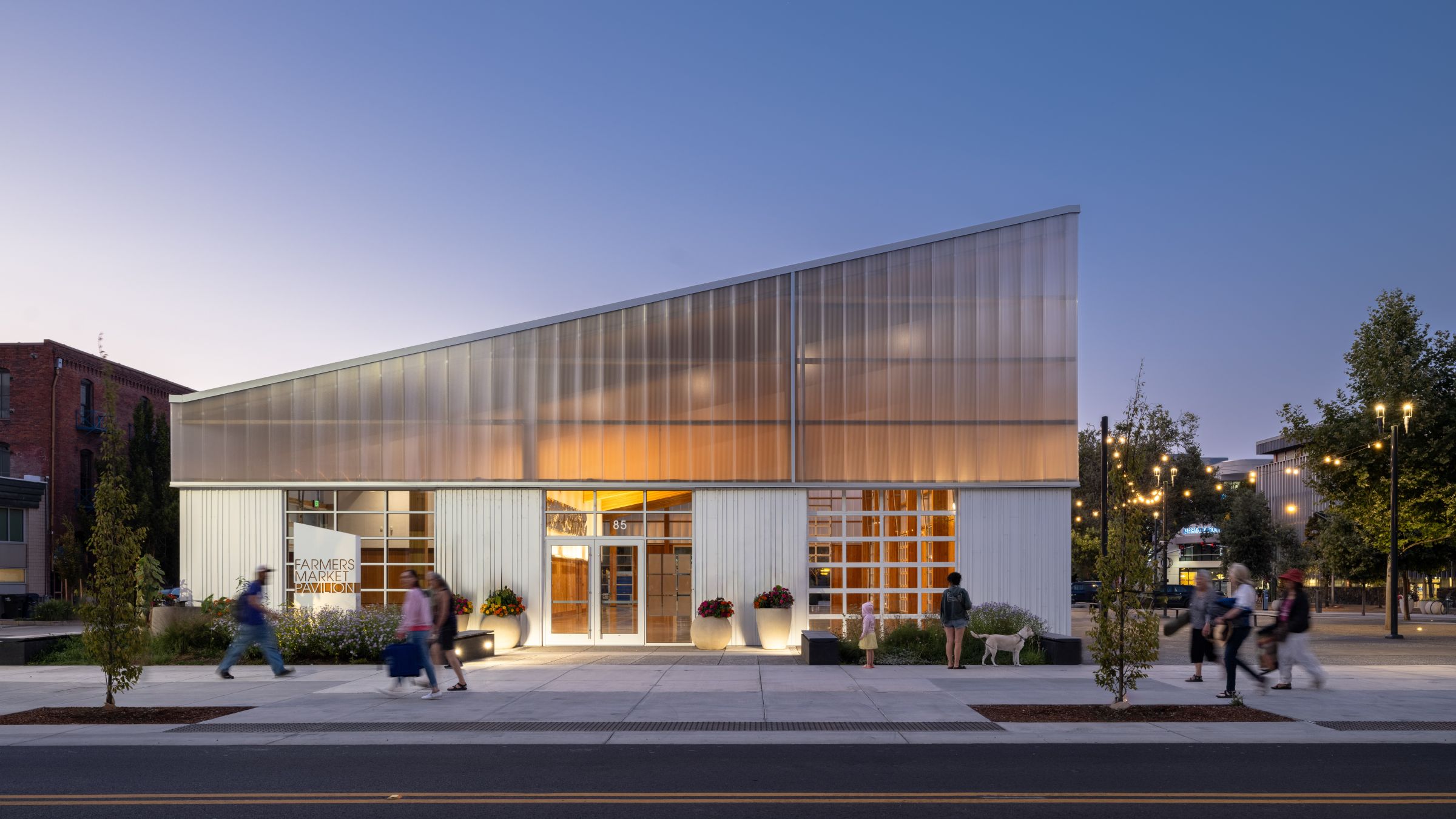
With one of the deepest portfolios of completed mass timber buildings in the country, we’ve delivered CLT and glulam on General Obligation Bond projects, community center renovations, and public safety facilities—all within constrained public budgets. The through line isn’t luck. It’s a specific approach to timing, team alignment, and value thinking that makes the numbers work.
The Cost Conversation Starts Too Late
On most projects, mass timber gets ruled out before anyone seriously studies it. A schematic design budget comes back, someone does a back-of-the-napkin comparison to steel and concrete, and the conversation ends.
That’s the wrong moment to run the numbers, and they’re the wrong numbers to run.
When we started the Robert Libke Public Safety Building in Oregon City, the construction manager came into the project convinced that the building should be stick-frame on load-bearing CMU walls. Low quality, but low cost—or so the assumption went. When we pushed for CLT and glulam instead, we didn’t just advocate for timber aesthetics. We ran a systems analysis: a lighter structure means lower foundation costs; prefabricated panels mean fewer labor hours in the field; an exposed structure means you skip a whole layer of finish costs. The math looked different when you looked at the whole picture.

What “Cost” Actually Means on a Public Project
Public owners are accountable to taxpayers in ways private developers aren’t, which is exactly why a total-value framework matters more, not less.
Here’s what a full cost picture includes for a mass timber project:
- Schedule savings: Mass timber typically erects faster than conventional structural systems. For a public agency paying for swing space or delaying service delivery, a shorter construction window has real dollar value.
- Finish cost offsets: Exposed CLT and glulam are the finish. You’re not adding drywall ceilings, suspended tile, or painted soffits over a beautiful structure that’s already doing the work.
- Foundation efficiency: Timber’s lighter weight means foundation loads drop. On the Robert Libke project, this was one factor that helped the structural numbers close.
- Long-term performance: Mass timber buildings are durable, low-maintenance, and tend to hold their character over decades. For a 50-year civic asset, that’s worth pricing in.
None of this means timber is always the cheapest option on paper. But it does mean the comparison is rarely as simple as “timber costs more.”
Budget Discipline Means Being Strategic, Not Scaling Back Ambition
At the Mt. Scott Community Center in Portland, inflation and late-pandemic timing created real budget pressure. The project had multiple funding sources, a tight timeline, and a community that had been waiting years for a facility that worked for them.
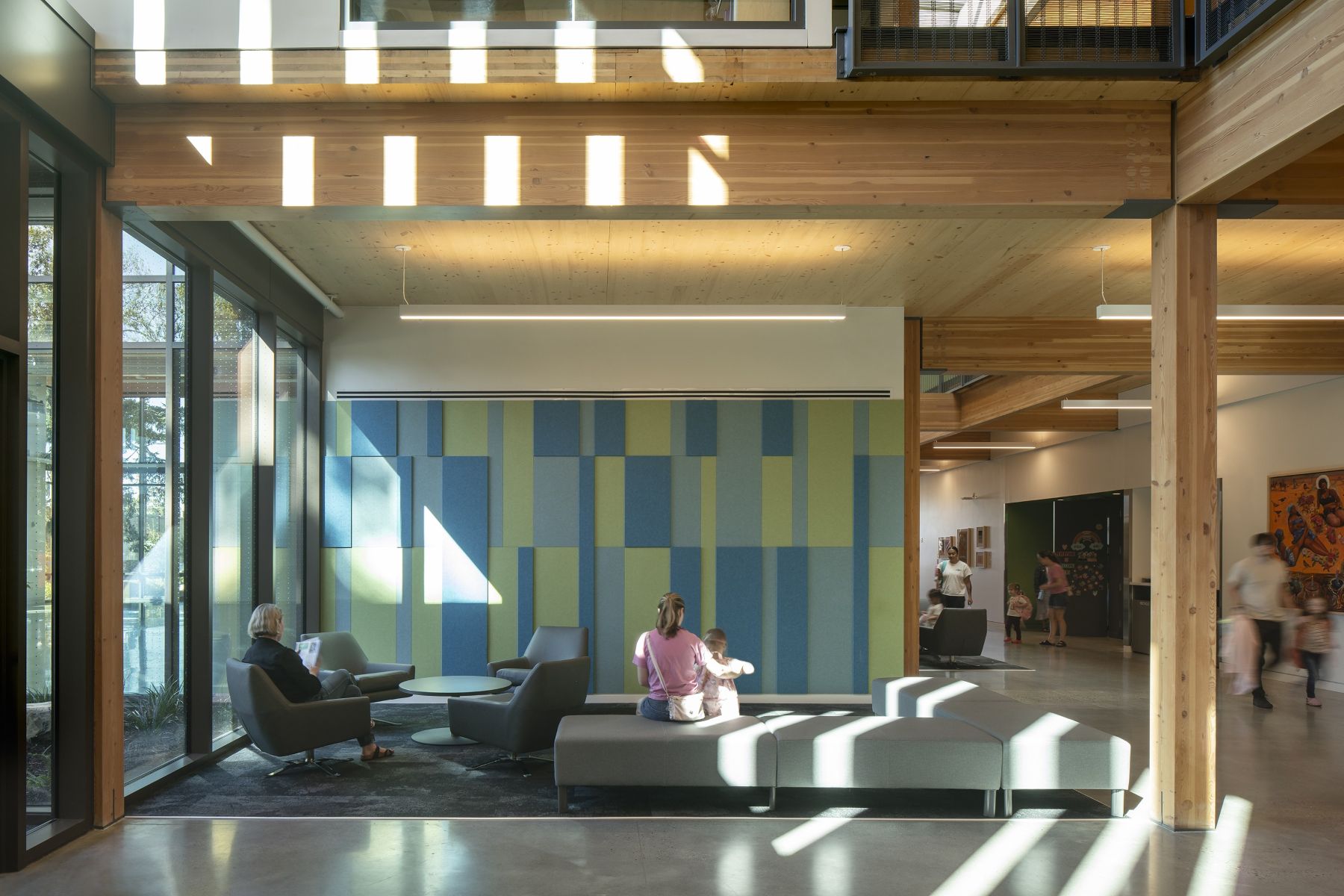
We didn’t respond by removing the mass timber. We responded by making strategic tradeoffs—reducing hallway width, simplifying roof forms, adjusting skylight quantities—while holding firm on the materials and spaces that would matter most to the community for generations. The CLT and glulam stayed. The quality of the spaces stayed. What changed were decisions that saved money without changing the community’s and staff’s experience.
That kind of discipline requires a team that knows where timber’s value lives, and where it doesn’t. Hybrid thinking matters here. Mass timber doesn’t have to do everything in a building to be worth using. On many mass timber projects, CLT appears in the most visible, high-impact areas while conventional framing handles back-of-house conditions where the tradeoff isn’t worth it.
Contractor Alignment is Part of the Equation
One reason mass timber bids might come back high is that someone without CLT experience pads their numbers with contingency. They’re not being dishonest—they’re managing unknown risk. The problem is that on a public project, those contingencies can kill the option before anyone’s actually studied it.
For the Redmond Public Safety Facility, we engaged experienced trade partners, including the mass-timber installer Carpentry Plus, early in the CMGC process. Their involvement in BIM coordination and early pricing wasn’t just about construction efficiency. It produced an estimate grounded in real knowledge of timber assembly, not general uncertainty. That’s a different number.
The lesson: the construction team is part of the timber equation, not just its execution.

What This Means for Public Owners Considering Timber
If you’re a public agency thinking about whether mass timber belongs in your next project, here’s the honest version of the conversation:
It might not always pencil. Some site conditions, program types, and budget ceilings mean timber isn’t the right call, and we’ll tell you that plainly.
But it pencils out more often than most public owners realize when the analysis happens early enough, when the right contractor and timber installer are brought in at the right time, and when the team knows how to find value across the whole project, not just the structural line item.
The questions worth asking at the start of your next project:
- Has a systems analysis been run comparing timber against conventional alternatives, including schedule, finishes, and foundations?
- Is the contractor familiar with CLT, or are their estimates built on unfamiliarity?
- Has the team tested timber early enough in design that it can still be meaningfully studied?
Mass timber is not a premium reserved for clients with flexible budgets. Across completed projects in Oregon, from a $10 million police station in rural Oregon to a $40 million community center retrofit in Portland, it has worked for public owners who asked the right questions early and partnered with a team that knew how to answer them.