

Public safety facilities must support complex operations under constant pressure. But they are also workplaces for people navigating long shifts, difficult calls, and unpredictable stress.
Increasingly, agencies recognize that architecture can support officer wellness. Facilities designed around both operational performance and human experience create healthier workplaces and stronger public safety organizations. At FFA, designing public safety facilities begins with a simple premise: operational clarity and officer wellness are deeply connected.
Operations and Wellness Work Together
Police stations and public safety buildings must function with precision. Evidence must be processed efficiently. Secure circulation must separate public and operational zones. Patrol officers need to move quickly between vehicles, briefing spaces, and report-writing areas.
But operational clarity also supports mental clarity.
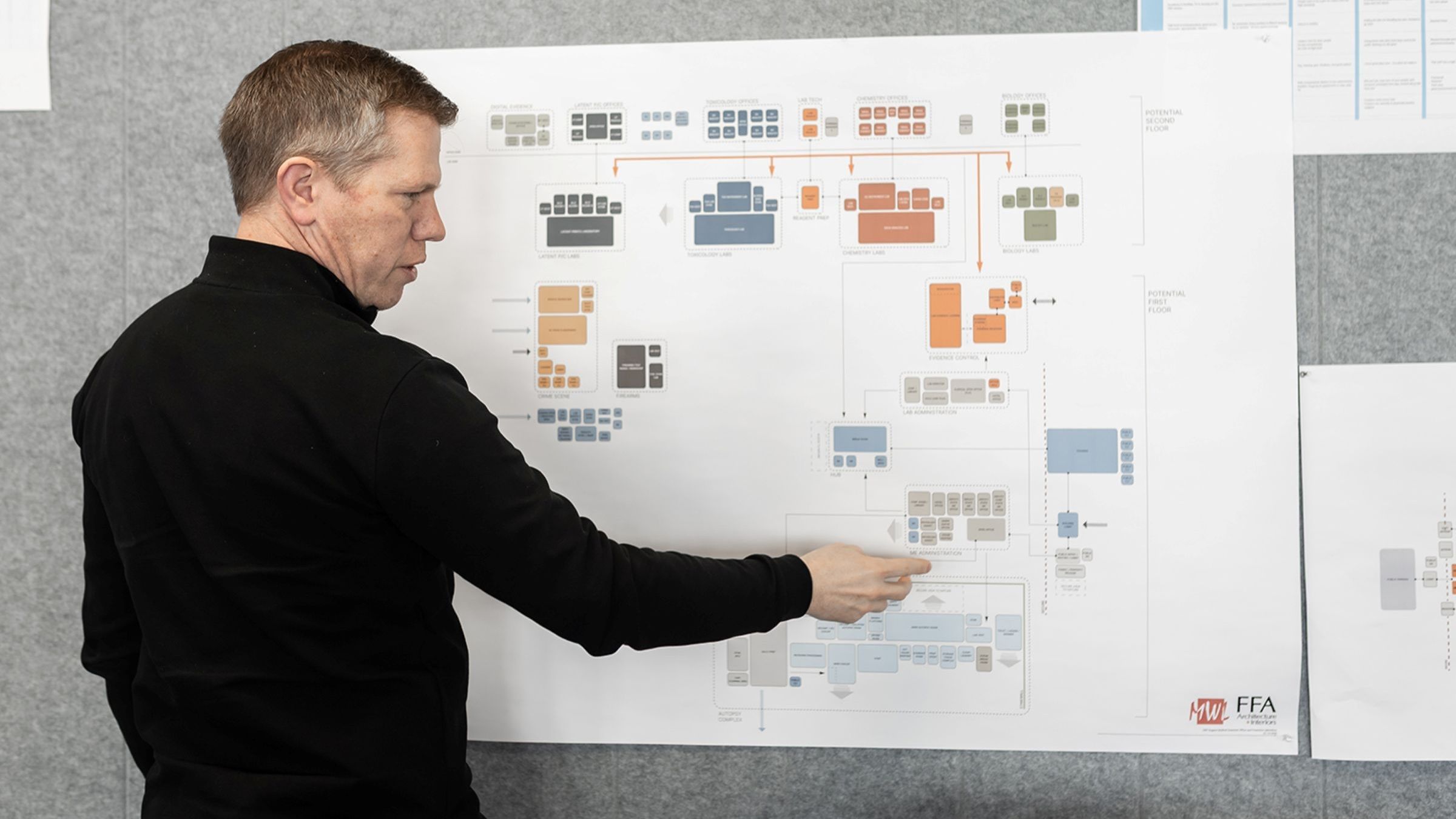
When spaces align with the way officers actually work, daily tasks become intuitive. Officers are not searching for equipment, navigating inefficient circulation, or working around poorly organized spaces during already stressful situations. Instead, the building quietly supports their work.
“Operations and wellness are deeply interconnected. When daily tasks flow naturally, officers can focus on the work that matters.”
In this sense, the building itself becomes part of the operational system—reducing friction and supporting resilience.
Human-Centered Public Safety Design
While operational planning remains essential, the daily experience of the people inside the building deserves equal attention. FFA approaches public safety design through a human-centered lens, beginning with the officers, dispatchers, and staff who will occupy the facility.
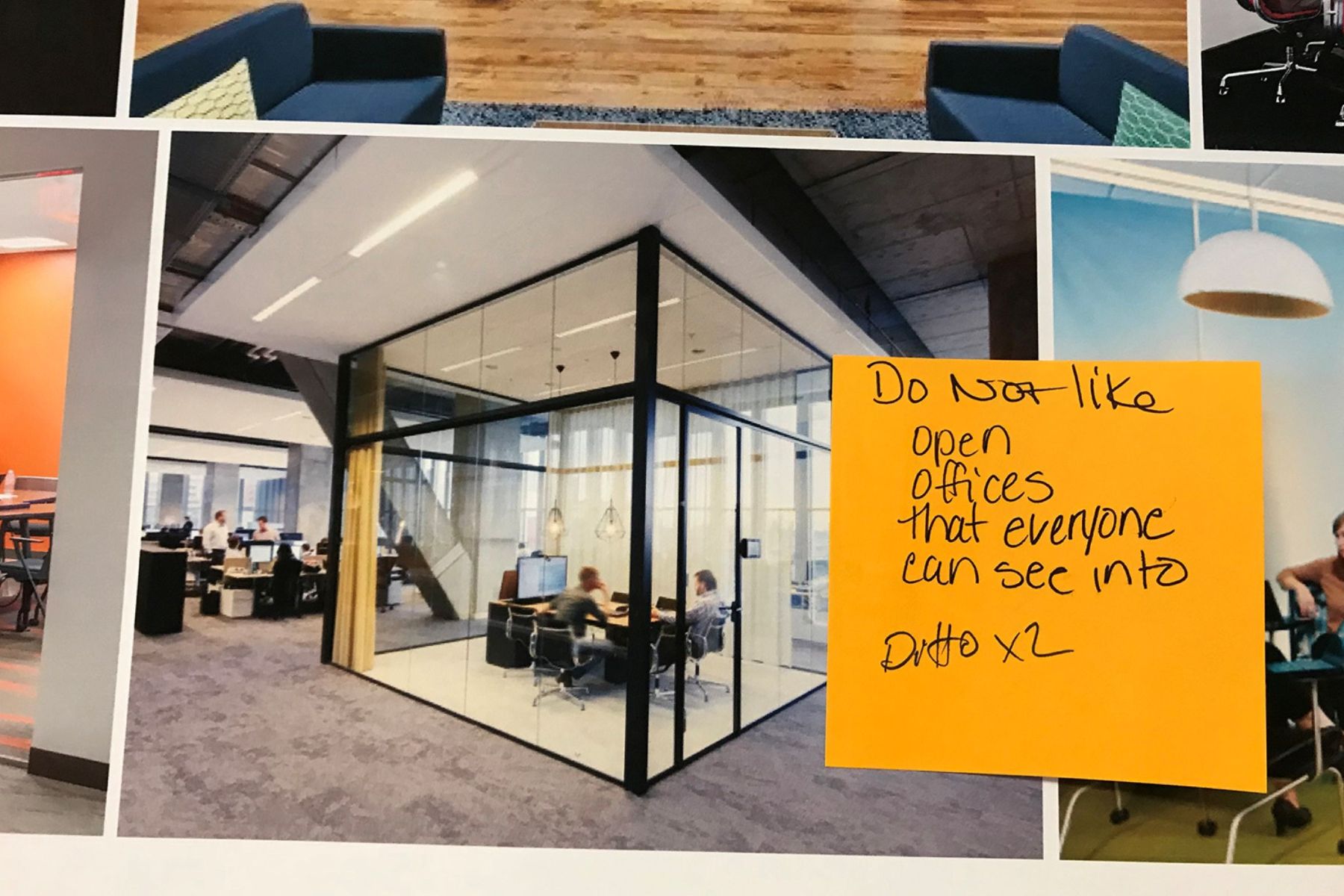
“Our design process starts with people—understanding their day-to-day experience and designing spaces that support them.”
This perspective recognizes that first responders spend long hours in these facilities and regularly encounter high-stress situations. Access to daylight, intuitive circulation, quiet work areas, and places to decompress can significantly improve the workplace environment.
Designing for wellness does not mean adding amenities after the fact. Instead, it means aligning operational and human considerations from the start.
Designing Around Each Agency
No two public safety agencies operate exactly the same way. Department size, staffing models, and regional conditions all influence how a facility should function.
Smaller departments often require flexible spaces that support multiple activities—from training to community meetings—within a limited footprint. Larger agencies may need specialized rooms for investigations, evidence processing, or tactical training.
“Every agency operates differently. The most effective facilities are purpose-built for the way that department actually works.”
Projects such as the Redmond Public Safety Facility illustrate how tailored planning can support both operational efficiency and a healthy workplace environment.
Balancing Security, Privacy, and Daylight
Public safety facilities must carefully balance openness and security. Officers often express concern that highly transparent buildings could compromise privacy or create a sense of vulnerability while they work.
At the same time, access to daylight and views is essential to creating a healthy workplace environment.
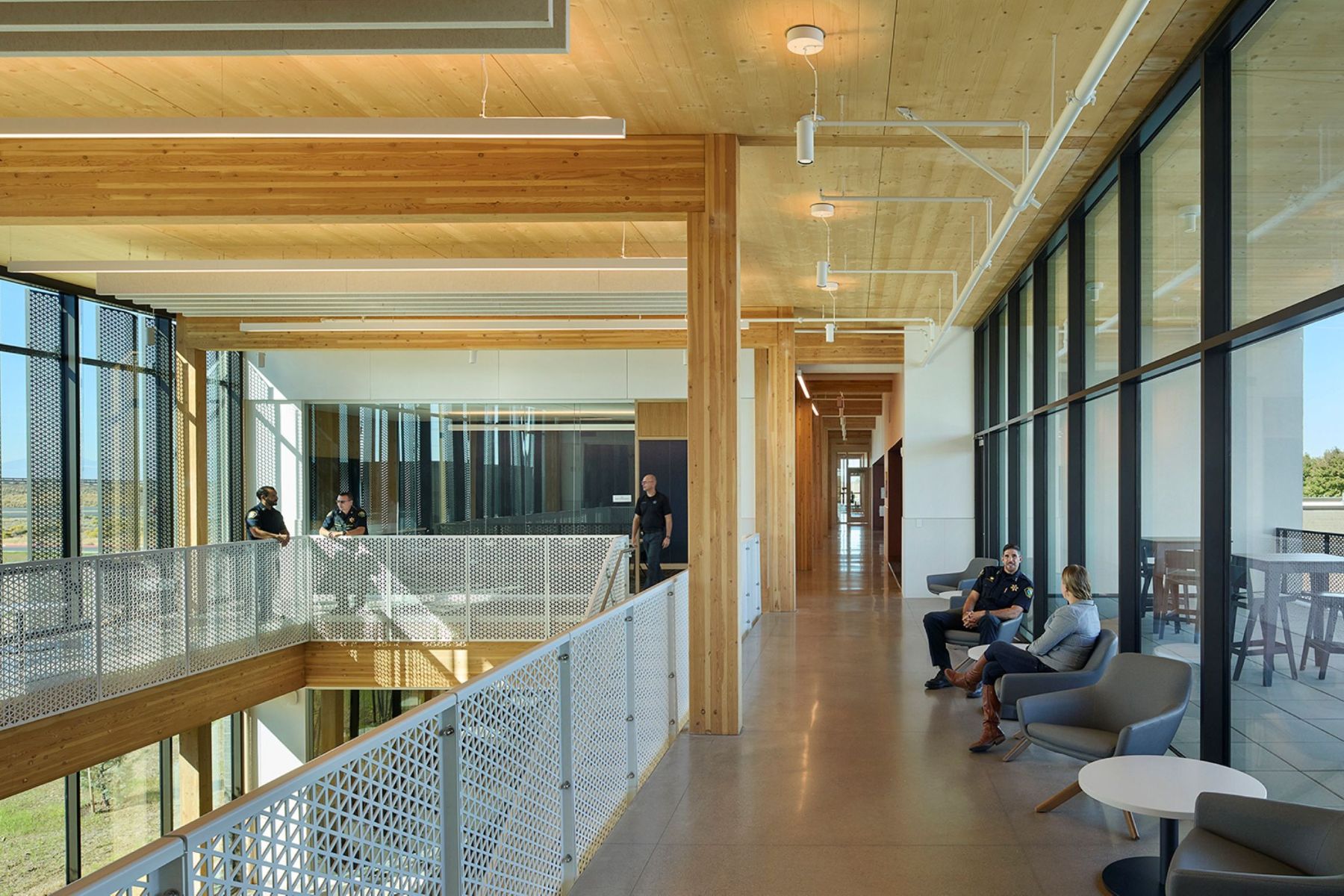
The design of the Redmond Public Safety Facility demonstrates how these priorities can work together. Strategic window placement, controlled views, and clear spatial organization allow interior work areas to receive abundant daylight while maintaining privacy and operational security.
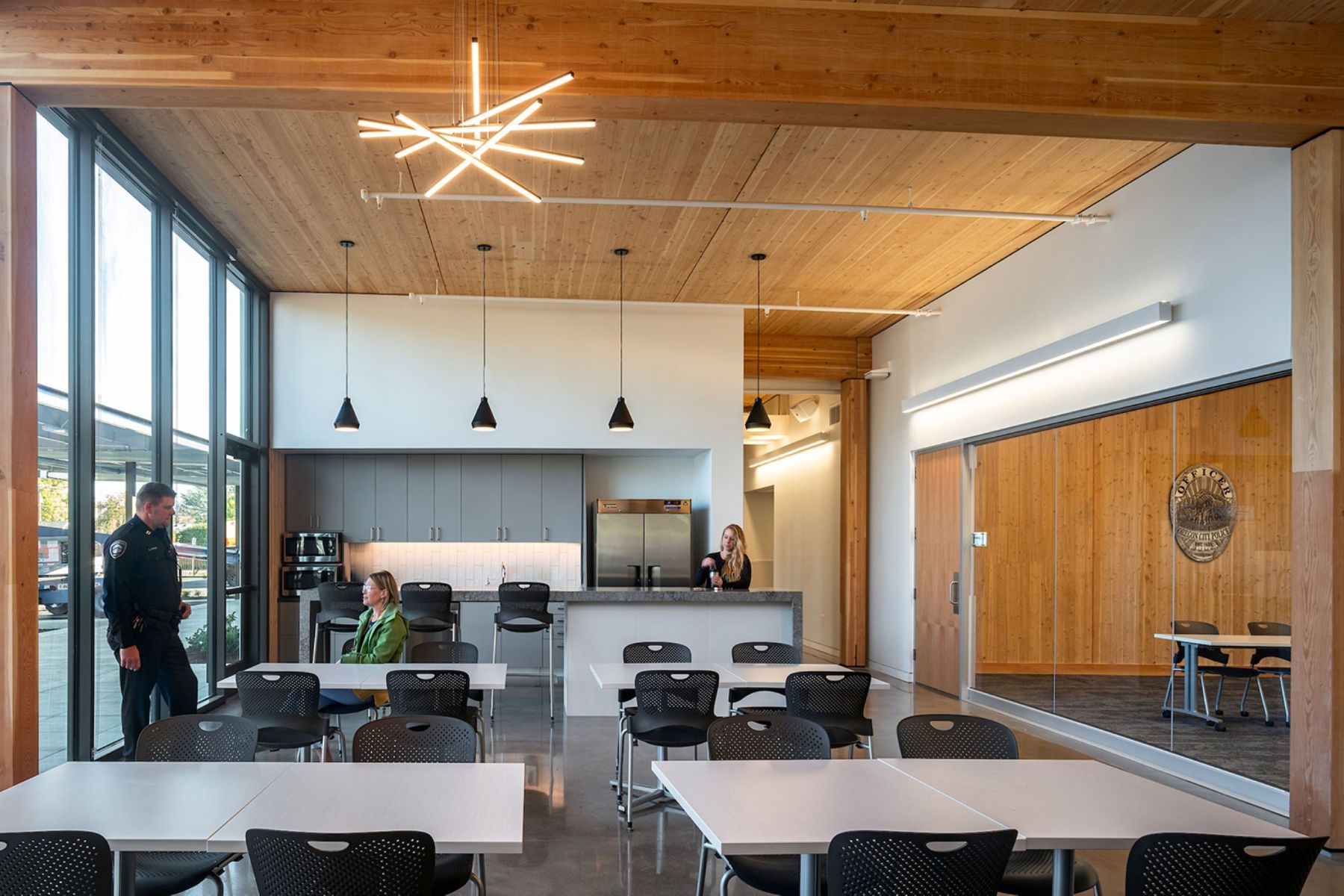
These decisions extend beyond glazing. Material choices and spatial design contribute to a workplace environment that feels both secure and welcoming. Rather than creating a bunker-like facility, the building uses warm materials and carefully framed views to support comfort and wellbeing while meeting the rigorous technical requirements of a modern public safety facility.
Spaces That Support Recovery
Public safety work rarely follows a predictable rhythm. Officers may return from a difficult call and immediately begin preparing for the next one.
Providing opportunities for brief recovery throughout the day can help staff reset between calls. Daylit break areas, quieter work zones, and access to outdoor space all contribute to healthier workplace environments.
At the Redmond facility, secure outdoor spaces allow officers to step outside without feeling exposed to the public. These small moments of respite can make a meaningful difference during long shifts.
Architecture cannot remove the challenges inherent in public safety work. But it can create environments that acknowledge those realities and support the people who face them every day.
Our Approach to Early Design
Supporting officer wellness requires balancing multiple priorities: operational needs, security requirements, durability, cost, and spatial quality.
Early design phases focus on understanding how the department operates and what staff need from the facility. Workshops and planning sessions help establish guiding principles and reveal opportunities where a single design move can support multiple goals.
Rather than layering wellness considerations onto a finished floor plan, these ideas develop alongside operational planning. The result is architecture that performs efficiently while creating a better daily environment for staff.
Designing for the People Behind the Badge
Public safety facilities serve critical civic functions, but they are also daily workplaces for the individuals dedicated to protecting their communities.
When architecture integrates operational clarity, thoughtful spatial design, and officer wellness, the result is more than an efficient building. It becomes an environment that supports resilience, strengthens agencies, and reinforces the connection between public safety professionals and the communities they serve.
Designing with that perspective ensures these facilities continue to support both people and operations for decades to come.
