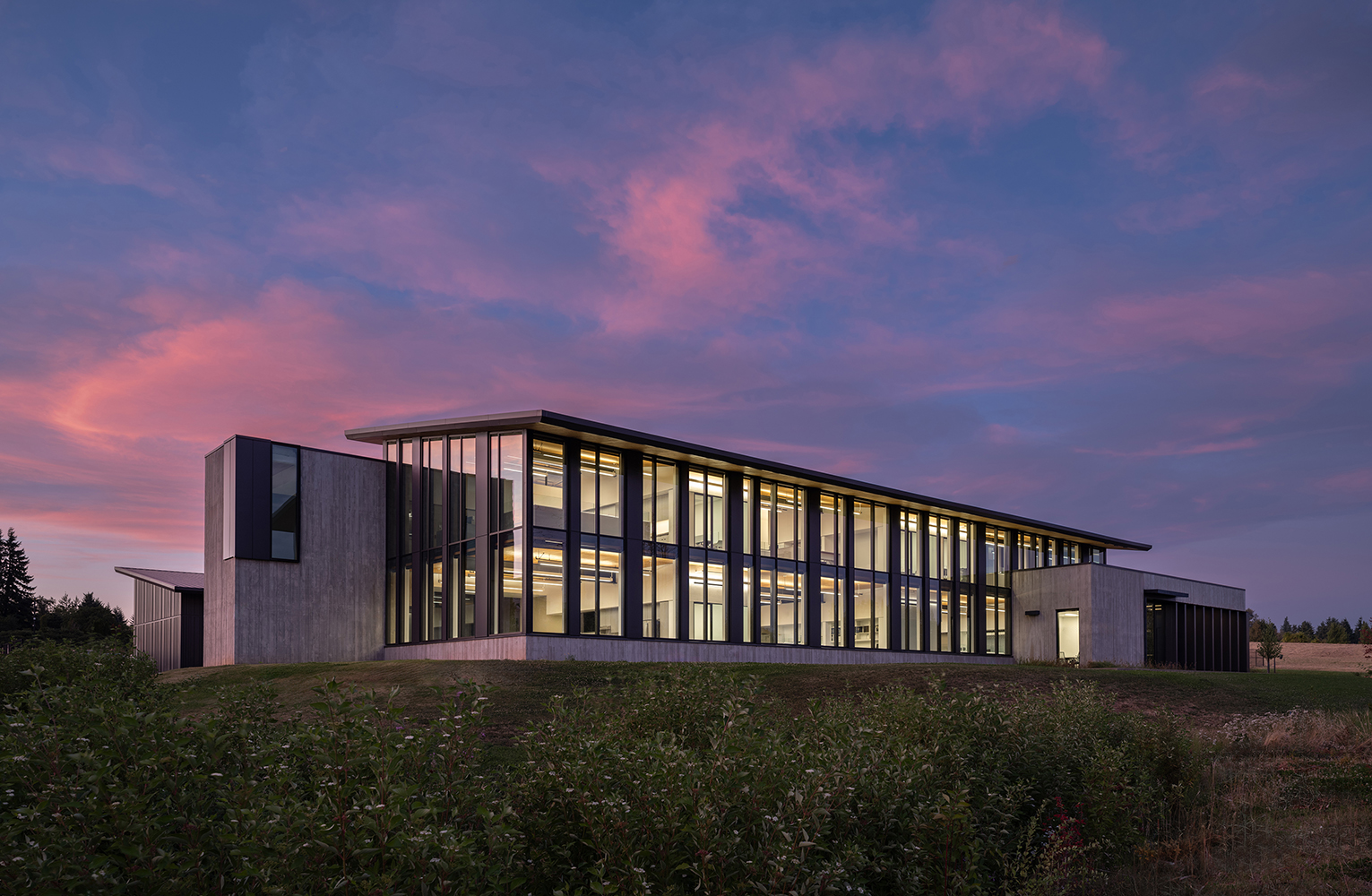
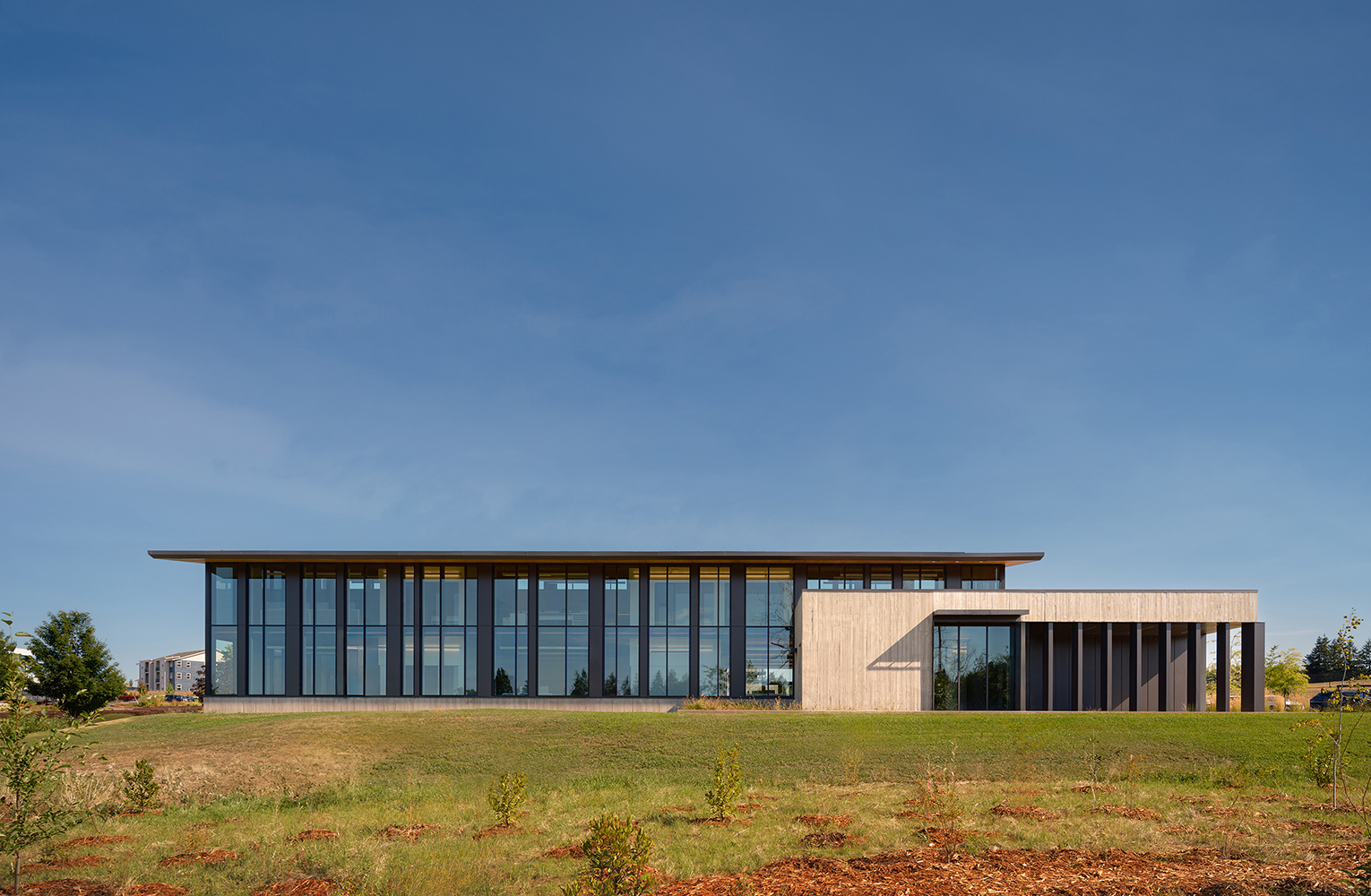
After decades of operating from an undersized house in historic Happy Valley, Sunrise Water Authority needed a new home to serve its expanding customer base and unify staff previously split across facilities. FFA partnered with the agency to design a modern administrative and operations campus that elevates service delivery, supports long-term growth, and expresses the story of the watershed that sustains the region.
The resulting facility strengthens Sunrise’s ability to serve more than 54,000 customers while creating a welcoming workplace rooted in stewardship, efficiency, and durability.
2023
Campus: ~ 5-acres
Administrative Building: 15,000 sf
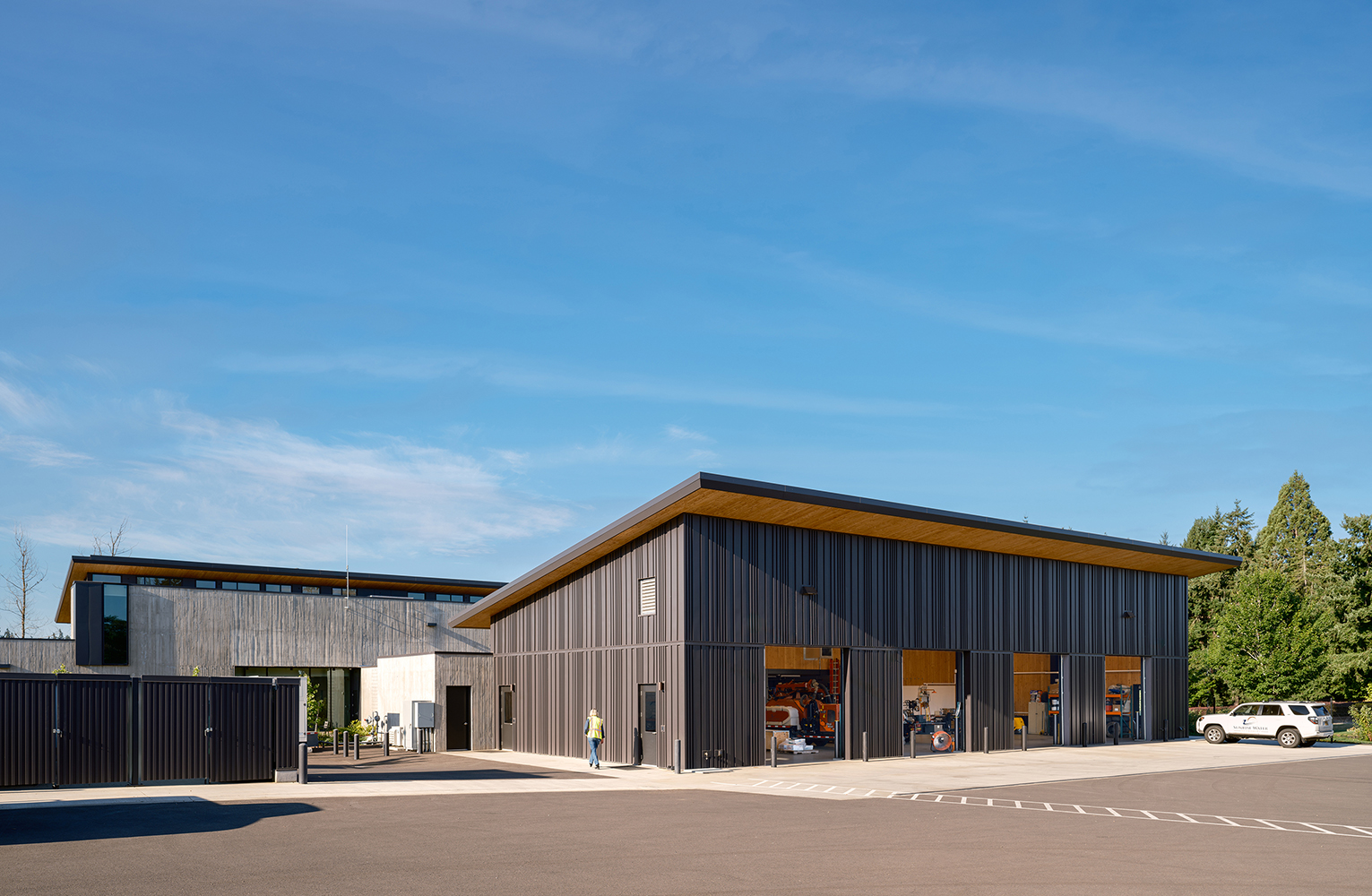
Shop Building: 5,700 sf
2024 DJC Top Projects Award
Site Context and Design
A Landscape Defined by Wetlands, Grade, and Water Flow
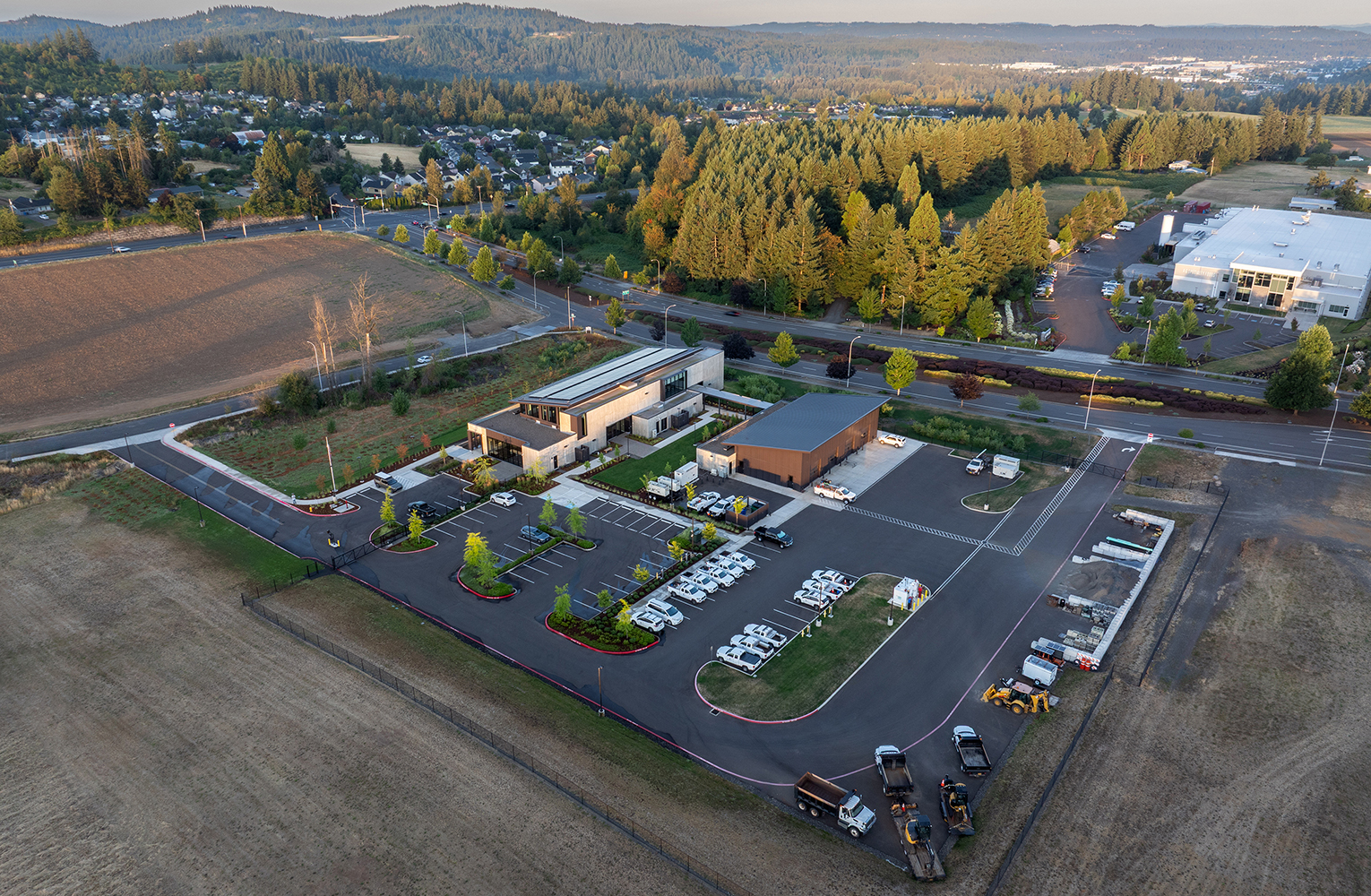
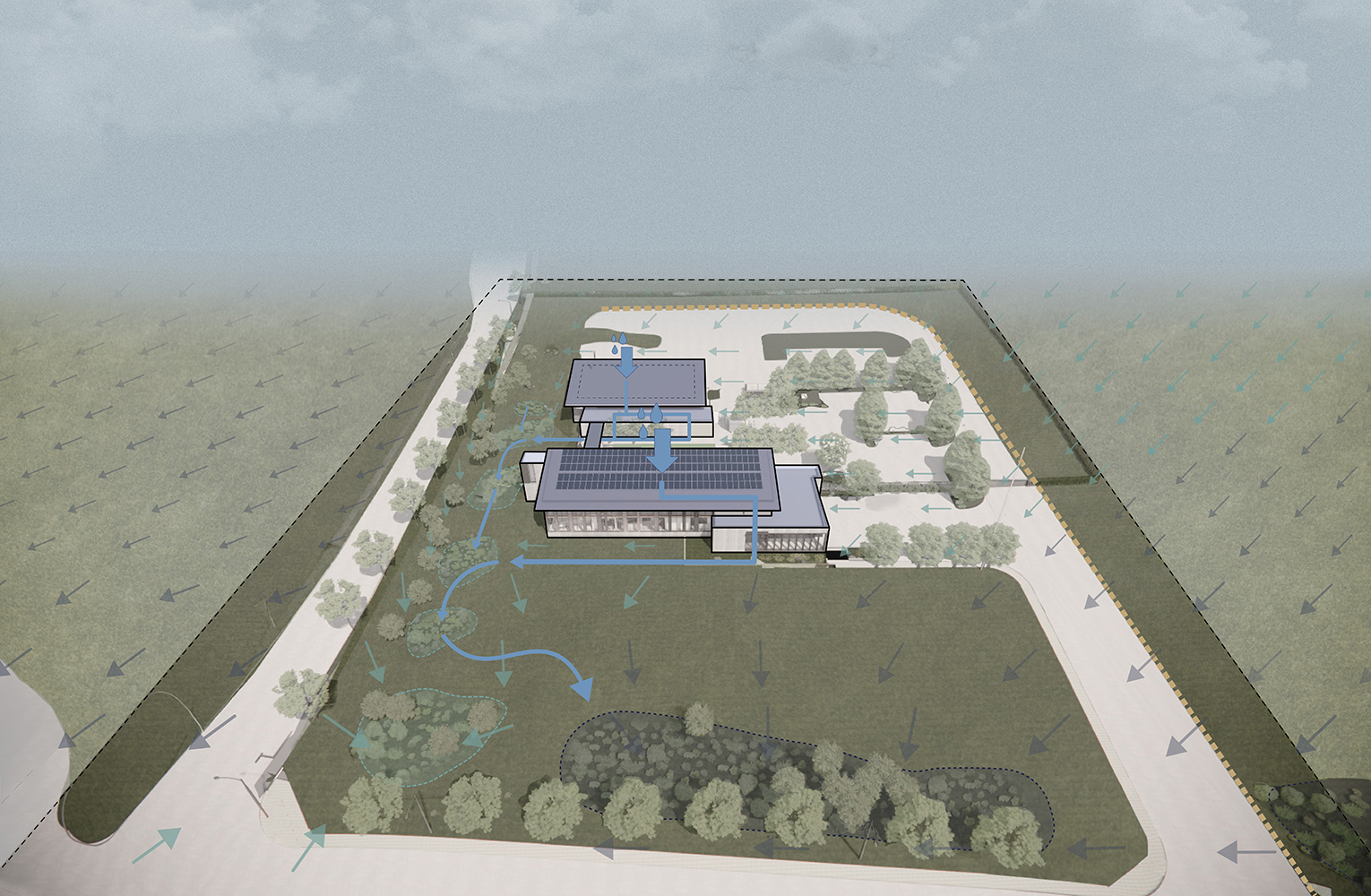
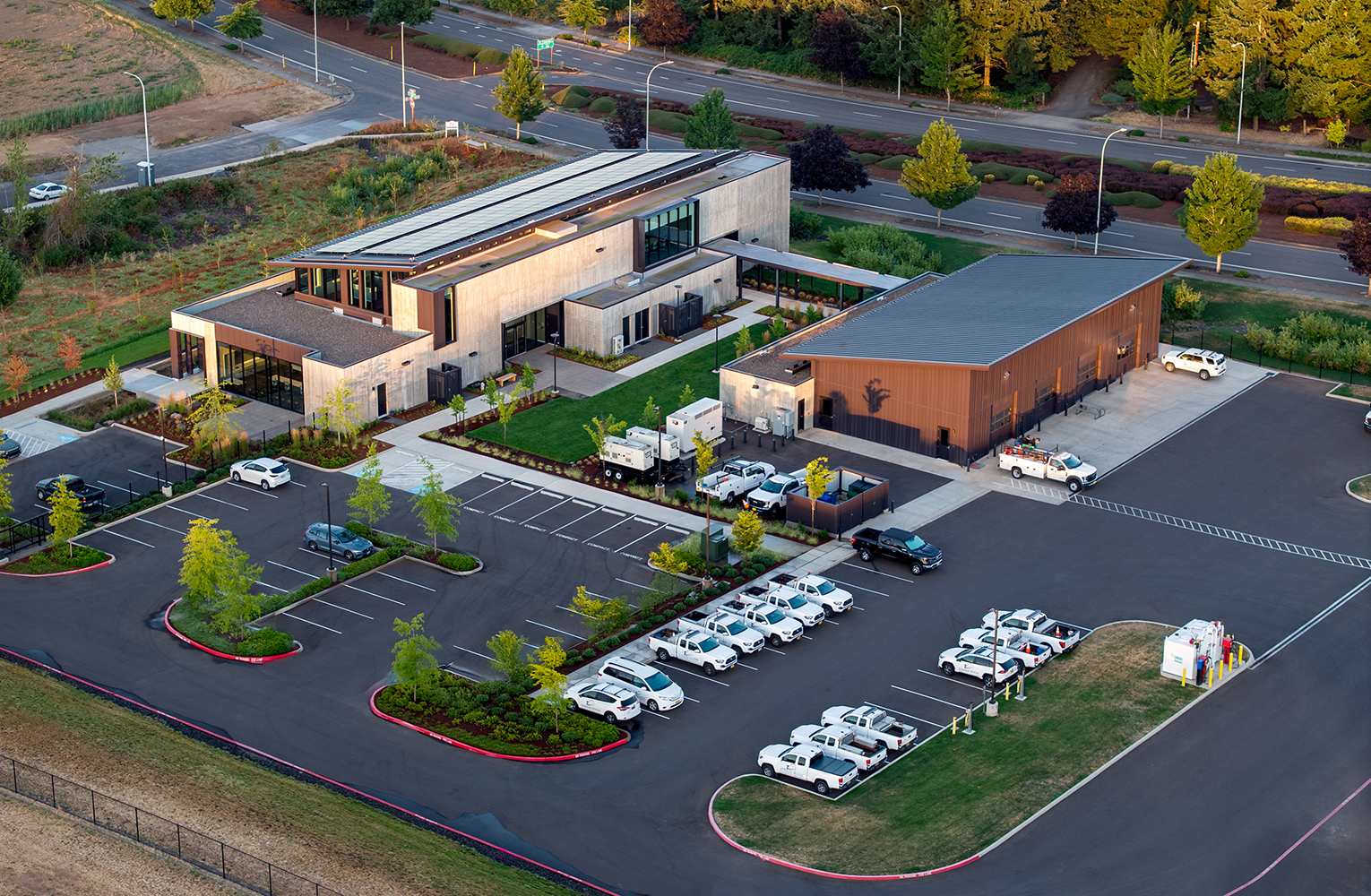
Wetlands and more than 40 feet of grade change shaped every decision on the seven-acre site. Working closely with KPFF and Mayer/Reed, the team minimized soil disturbance, protected the large wetland, and developed a sequence of vegetated basins, channels, and swales that naturally guide stormwater across the landscape.
Celebrating Water as Identity and Mission
Through early visioning, staff expressed pride in the resource they protected and a desire for community members to better understand the value of local water systems. This became the conceptual foundation: make water visible.
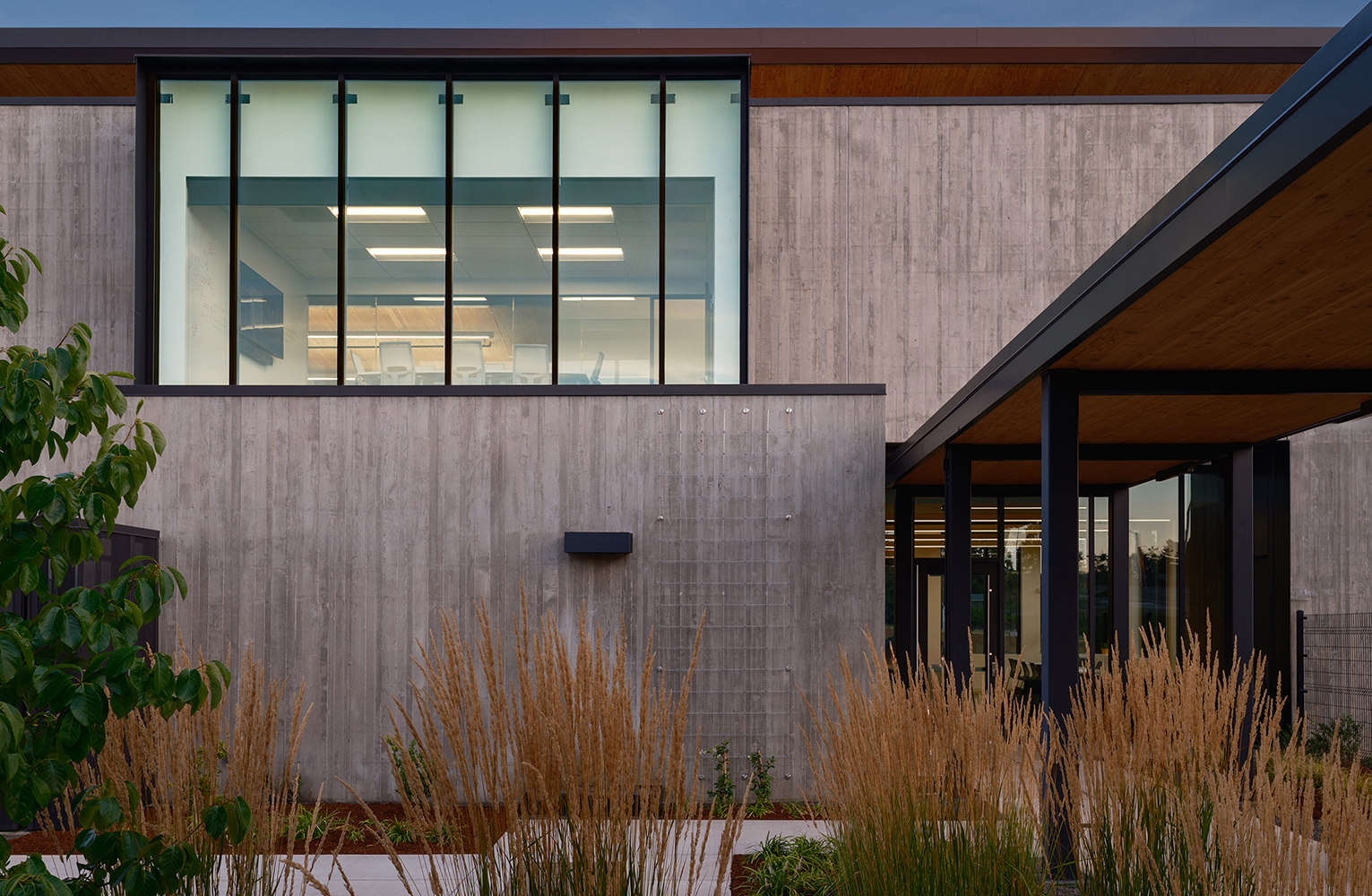
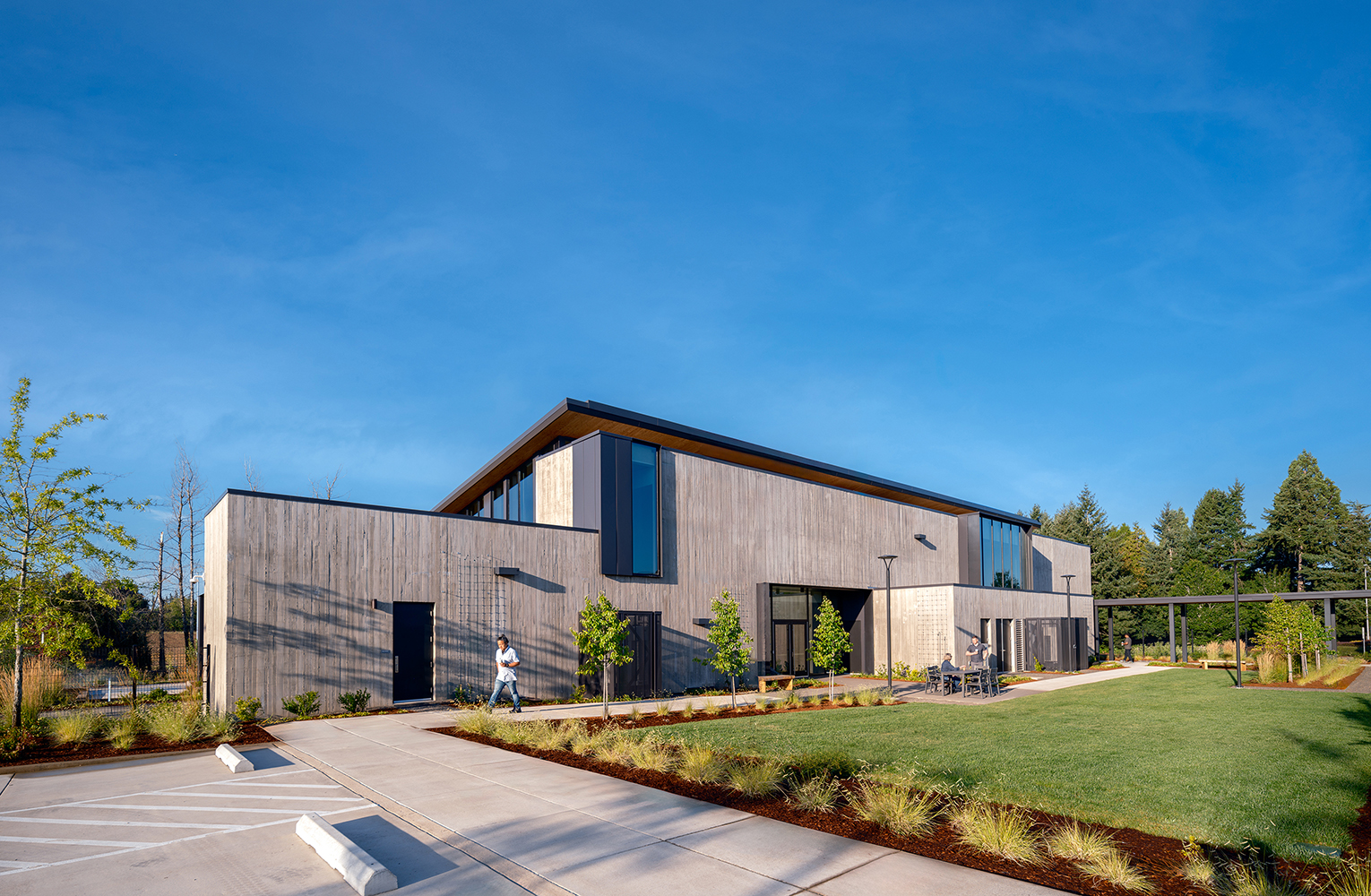
Rooflines converge rainfall into expressive scuppers; channels and plantings guide water through the courtyard; materials, forms, and textures subtly recall the Clackamas River watershed.
These gestures turn everyday operations into a visible narrative of stewardship.
Campus Organization
Two Buildings, One Team
The campus includes a daylight-rich administrative building and a CLT-framed field operations shop. A covered walkway and shared courtyard link the buildings, strengthening the connection between field and office staff.
Both buildings share roof geometry, material palette, and structural clarity, an intentional design choice to affirm that administrative and field operations carry equal importance. Despite intense value engineering, the team preserved key design elements, including the CLT structure in both buildings, maintaining the project’s long-term durability and carbon benefits.
Designing During a Time of Change
Navigating A Remote Process, Escalation, and Regulatory Complexity
The project began weeks into the COVID-19 lockdown, and all programming interviews, visioning sessions, design workshops, and Board presentations occurred virtually. This created an inclusive engagement process in which staff, leadership, and commissioners could consistently participate despite shifting working conditions throughout the pandemic
Navigating Escalation and Regulatory Complexity
Industry-wide cost escalation required multiple rounds of value engineering without compromising the project’s mission. At the same time, the team coordinated approvals across more than eight agencies, including city planning, state lands, fire, transportation, and environmental services, shepherding the project to permit in a landscape with limited interagency coordination.
Sustainability and Stewardship
A Campus Guided by the Path to Net Zero
From the rooflines to the restored wetland edge, the design reflects Sunrise’s commitment to sustainability. Environmental strategies include:
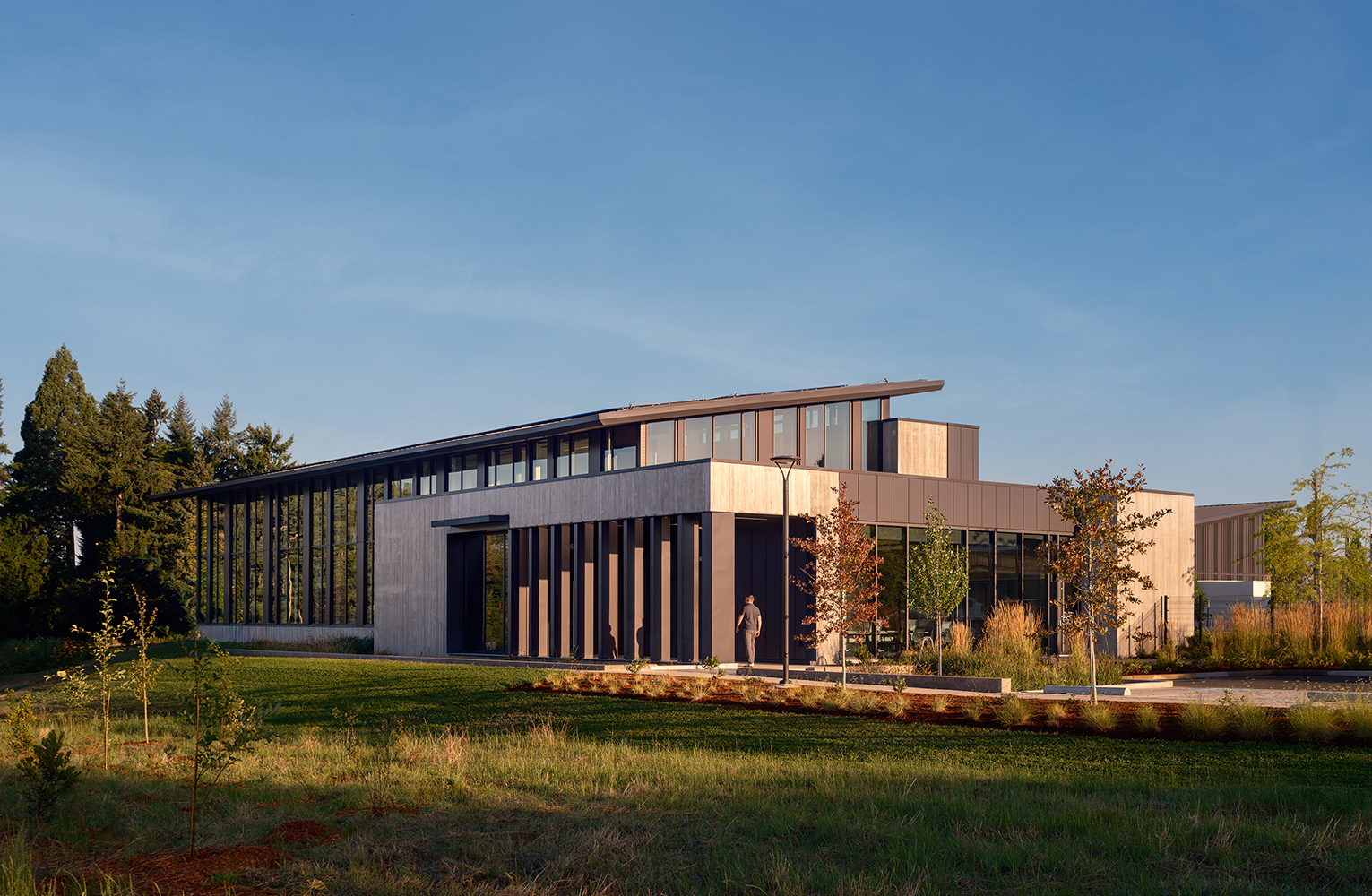
- High-performance envelope with deep south-facing overhangs
- Solar PV array on the admin building, with planned expansion on the shop
- CLT structure to reduce embodied carbon
- Dark-sky-compliant lighting and efficient mechanical systems
- Natural stormwater treatment through vegetated basins and swales
- Daylighting for all workspaces, reducing energy use, and improving staff comfort
Together, these strategies create a durable foundation for long-term operational resilience
Supporting Daily Operations
Designed for the People Who Keep the System Running
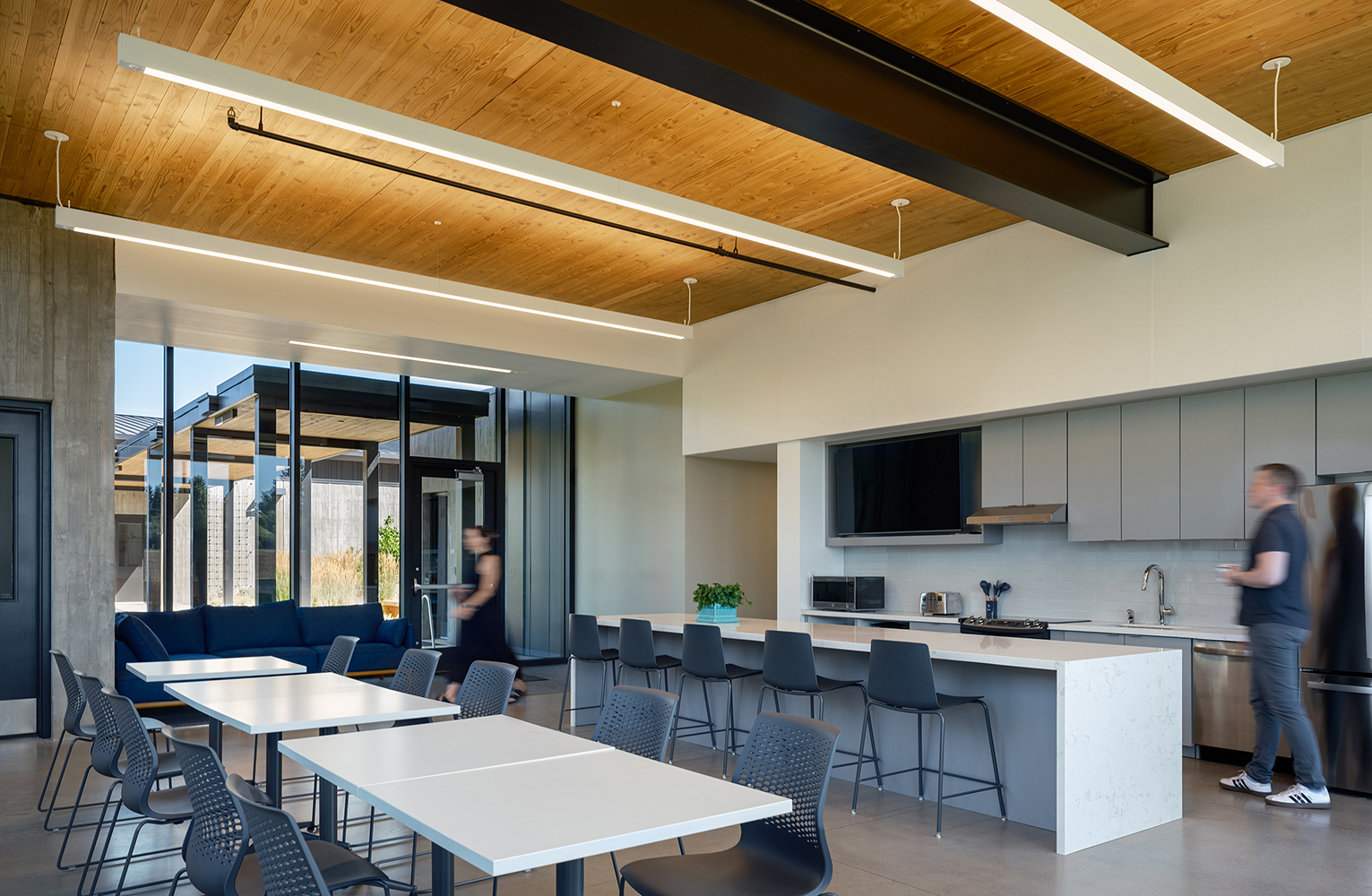
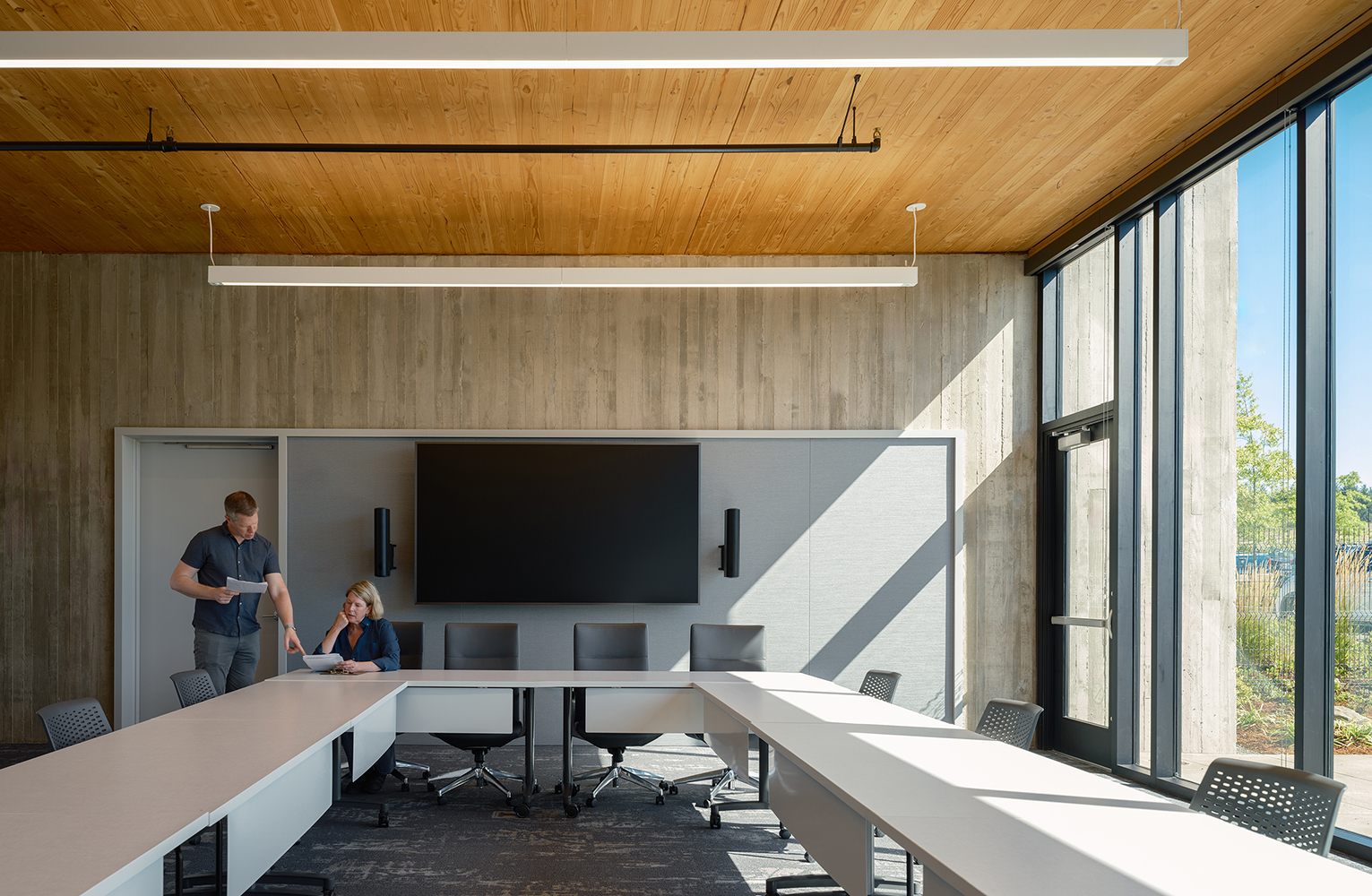
The new campus improves the everyday experience for staff who previously worked in constricted, outdated spaces. A dedicated decontamination and locker sequence connects directly to the covered walkway. The break room, durable, bright, and comfortable, sits at the heart of both teams’ daily routines.
Comfort, Acoustics, and Lighting
- Full-height acoustic panels, tackable surfaces, and carpeting reduce noise in open work areas
- Direct/indirect LED lighting adjusts automatically with daylight and occupancy
- Large south-facing glazing brings natural light and views to nearly every workspace
These strategies create a calm, efficient, and welcoming environment for staff and visitors.
Future-Readiness
Built to Grow with the Region
The administrative building includes expansion capacity within its existing footprint, including the ability to extend the second floor over the boardroom as staffing increases, and a future storage building can be added east of the shop without disrupting operations.
This flexibility supports the district’s long-term capital planning and ensures the campus can evolve alongside community needs.
Project Impact
A Facility that Reflects Sunrise’s Mission
Leadership has responded enthusiastically to the new campus, noting improved staff workflow, increased visibility into operations, and a workplace that finally reflects the scale and quality of the services they provide.
As landscape plantings mature and final technology upgrades are completed, the project will enter a formal post-occupancy evaluation, continuing Sunrise’s commitment to learning, adaptation, and operational excellence.